
What is vinegar?
In concrete terms, vinegar is a condiment liquid resulting from the fermentation, in the presence of oxygen, of a red or white wine ("sour wine") or another alcoholic solution. Under the effect of oxidation, ethanol is converted into acetic acid. It is therefore an acetic fermentation, following a primary alcoholic fermentation. Each region in France or around the world has its own alcohols, so variety is essential, with numerous nuances of acidity, aromas, textures, or colors.
Be careful, the percentage indicated on the label does not correspond to the alcohol content of the vinegar or the beverage from which it is derived, but to the amount of acetic acid: the higher it is, the more pronounced the acidity on the palate.
Which vinegar to choose?
Fruit vinegars, our favorites
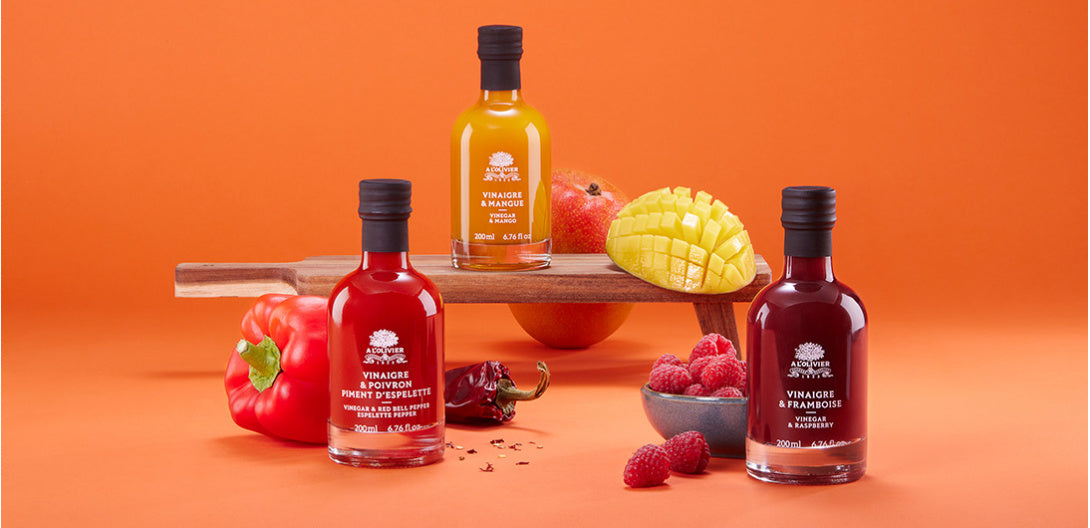
Fruit vinegar usually refers to a vinegar with an added aroma or real fruit purée. The latter is, of course, the best: between a generic raspberry vinegar, flavored with a more or less natural aroma, and our raspberry purée preparation which contains 40% fruit, the difference in taste is major.
This technique allows us to obtain original and intensely aromatic vinegars: lemon-grapefruit, fig, passion fruit, mango, tomato-basil, bell pepper-Espelette chili, beetroot-thyme… They enhance mixed salads, are used to deglaze meats (beef, duck) and invite themselves into fruit desserts, bringing their tangy notes. Try a few drops in a non-alcoholic cocktail: it changes everything!
Wine vinegar
Wine vinegars are the most common in France. Some, industrially produced in 24 hours, are more acidic and less aromatic than artisanal versions, which take a long time to develop. White wine vinegar, sometimes flavored, is ideal with fish, seafood, white meat, or as an acidic touch in a butter sauce, such as beurre blanc. Red wine vinegar, with a stronger taste, is particularly suitable for sauces, vinaigrettes, or marinades for red meats.
Sherry vinegar
Sherry vinegar is produced in Andalusia, from white wines with a Denominación de Origen (DO) produced in Jerez de la Frontera. It is aged in oak barrels for at least 6 months, or longer for the most prestigious nectars. It has a beautiful amber color and a complex, powerful, and woody aroma.
Ours is obtained by a traditional process from red Oloroso Sherry wine, produced with Pedro Ximenez and Palomino grape varieties, sweet and rich in sugar. It enhances salads and vinaigrettes, elevates meats, and even accompanies some desserts like fruit salads (delicious with peaches) or vanilla ice cream.
Cider vinegar
Sweet, fruity, and less acidic than wine vinegar, cider vinegar, once typical of French cider-producing regions, is now commonly used in cooking throughout France. It makes delicately vinegared sauces and lends itself to many pairings and recipes: seafood court-bouillons, marinated fish, mayonnaise for shellfish, salads combining fruits and vegetables (e.g., apples and endives), fruit chutneys, apple compotes...
Balsamic vinegar
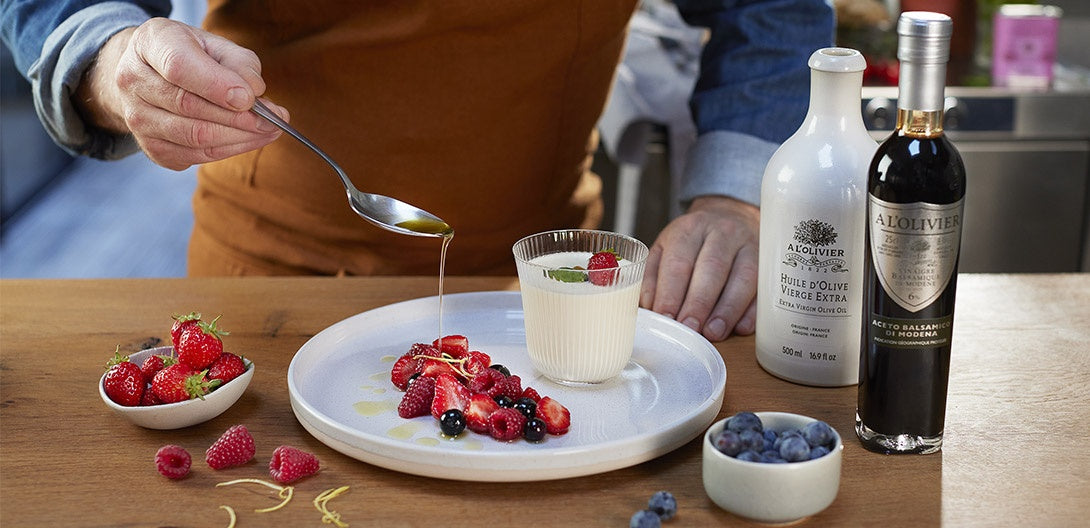
The best balsamic vinegars, produced in northern Italy, are protected by a PDO (Protected Designation of Origin) or a PGI (Protected Geographical Indication). Their secrets: the use of cooked grape must and aging, which give them an amber, complex, and syrupy character.
We offer balsamic in several forms:
- Silver quality with 50% must for gourmet cooking (deglazing foie gras or calf's liver, condiment for good Parmesan, finishing touch for strawberries or vanilla ice cream...).
- Bronze quality with 25% must for more everyday cooking (dressing a salad, deglazing white meat or sautéed figs...).
- With black truffle juice for naughty salads, celeriac soup, or as a finish for fried eggs.
- In cream to decorate plates, bind sauces, or flavor panna cotta.
- In spray to subtly perfume.
Rice vinegar
Made from rice alcohols, rice vinegar is low in acidity. The most common Japanese type, transparent to yellow, is perfect for seasoning sushi rice. It is also delicious for "minute" vegetable pickles. But Japan also has red and black vinegars. Dark rice vinegars are also found in Korea and China, where black vinegar is highly prized for its aromatic depth. To be found in Asian or organic grocery stores and used in exotic or local recipes!

Leave a comment
This site is protected by hCaptcha and the hCaptcha Privacy Policy and Terms of Service apply.