
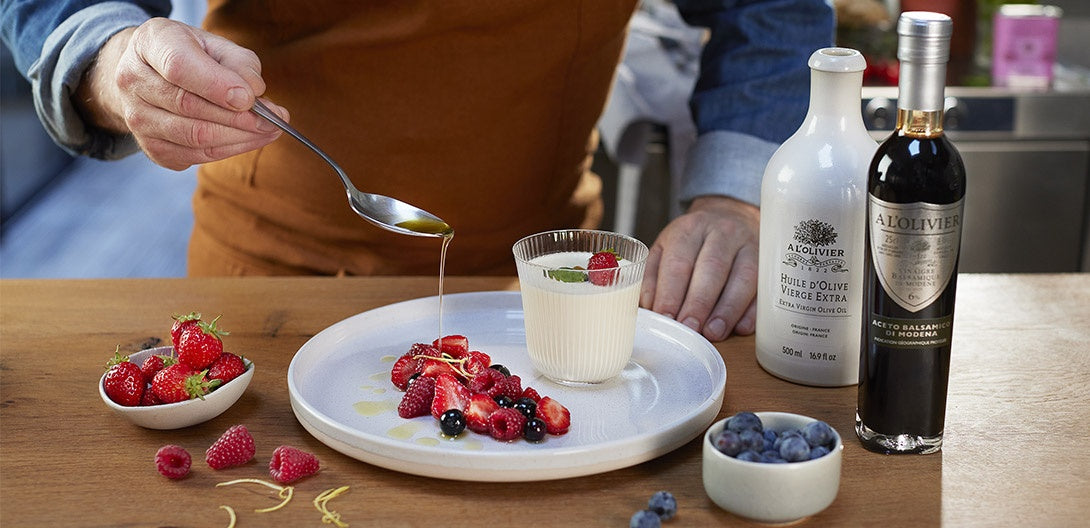
A golden rule to always keep in mind: butter contains approximately 16 to 18% water, while oil is 100% fat. This is why 100g of butter should not be replaced by 100g of oil in a recipe, as this could result in an overly greasy cake. If you replace butter with oil in a recipe, be sure to adjust the quantities accordingly. Now, follow this guide to find out which vegetable oil to use to make delicious, light cakes.
Replacing butter with olive oil
Olive oil is an ideal substitute for butter in many cakes, making them lighter and easier to digest. Choose an extra virgin olive oil that will perfectly withstand baking. Unlike other vegetable oils that are denatured by heat, olive oil holds up well even at high temperatures, with a smoke point of 210°C for extra virgin olive oil. Use a whisk to thoroughly mix the olive oil into your batter, and remember to oil the mold so the cake can be easily removed. Among the most delicious recipes are olive oil madeleines, flavored with a little lemon or orange blossom, as well as olive oil pound cake. For a precious saving in time and flavor, try flavored oils, rich in unique aromas. Discover, among our favorite flavored oils, verbena and chili (perfect for a chocolate cake), lavender and tonka bean (for a clafoutis) and vanilla-combava (a delight in a cake) which will constantly renew your creativity.
Refined or unrefined oil?
When choosing an oil suitable for baking, the question of whether the oil is refined or not arises. An oil extracted by pressing is a virgin oil. This mechanical method preserves the vitamins, nutrients, and delicate flavors of the oils. A refined oil is an oil extracted with heat using solvents, resulting in an oil that is stable over time and easy to store. The technique of hot extraction with solvents allows for more oil to be recovered from the raw material used (which is useful when pressing small seeds, such as grape seeds) and offers a better yield than cold pressing of virgin oil. Virgin oils, especially olive oil, guarantee levels of vitamin E, omega 3 and 6, as well as flavor.
Our selection of flavored oils for light and tasty cakes
Now that you know everything (or almost everything) about oil in baking, you can, in addition to olive oil, vary the pleasures by using many other oils. There are two main families of oils: those with a neutral taste and those with a more pronounced flavor. Grapeseed oil and sunflower oil are neutral. These are safe bets, easy to use in all cakes.
Virgin rapeseed oil is not recommended here, as it does not tolerate cooking.
Coconut oil, whose saturated fatty acid content explains its texture (solid when cool, liquid when heated) is a delicious ally for cakes, with a distinct taste that pairs well with chocolate. Remember to melt coconut oil over low heat before mixing it into your batter.
Finally, walnut oil and hazelnut oil can be mixed in equal parts with neutral oils (grapeseed, sunflower) to add a subtle nutty flavor to your cake. For example, a yogurt, chocolate, and walnut cake will have its flavor enhanced by the use of walnut oil. Good to know: the walnuts and hazelnuts used to make A l'Olivier oils are lightly roasted before being ground, which gives their oil an even more gourmet flavor, and your pastries will benefit from this too.


Leave a comment
This site is protected by hCaptcha and the hCaptcha Privacy Policy and Terms of Service apply.