
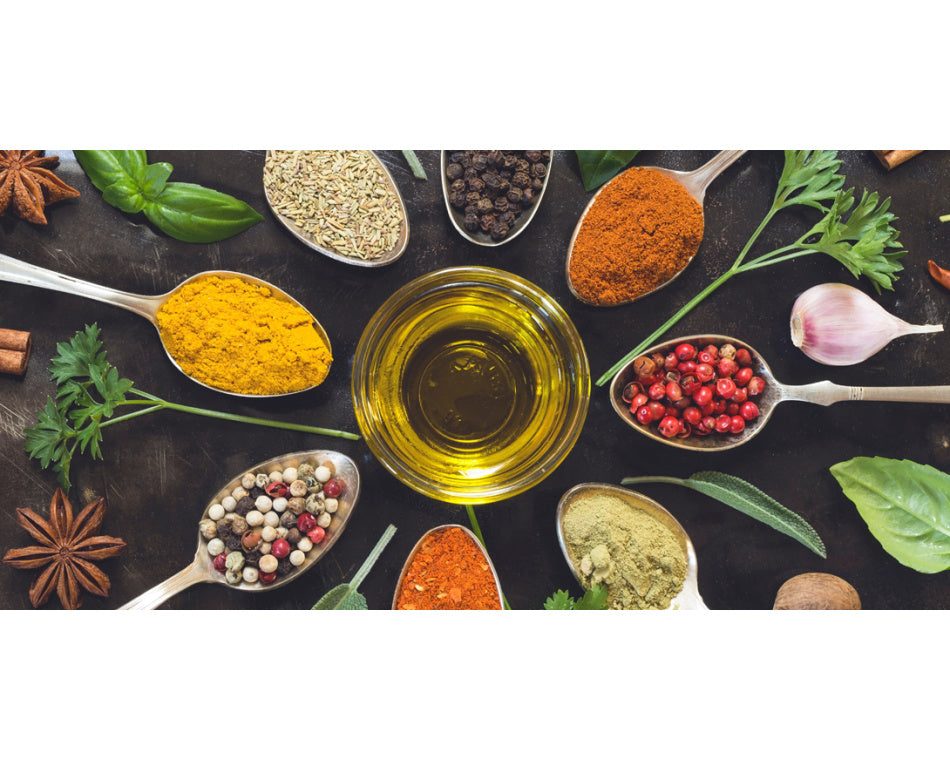
To help you find your way around, our experts have put together a guide to essential seasonings for your kitchen.
1. Extra virgin olive oils are essential in Mediterranean cuisine. They are among the most versatile oils in cooking. They are ideal for seasoning salads or raw vegetables, for cooking meats or vegetables over medium heat. They can also be used as a marinade before grilling or baking, or to make delicious pastries. Did you know that olive oils are classified into 3 flavor families called "Fruity"? There is Green Fruity, Ripe Fruity and Matured Fruity. But did you know that there are also flavored olive oils ? These olive oils are infused with aromatic herbs, spices or citrus fruits to add a touch of flavor to your dishes. Among the most well-known isbasil olive oil, which is perfect for pasta and pizzas. Garlic and thyme olive oil is also excellent for meat and vegetable dishes, while lemon olive oil is ideal for seafood, fish, and mixed salads. The advantage of these aromatic olive oils is that they combine the quality of extra virgin olive oil with that of herbs, spices, or citrus fruits, for simple use and guaranteed results.
2. Vinegars, there is a wide variety of them. The best known and most noble is balsamic vinegar. It is a staple in Italian cuisine, perfect for salads, roasted vegetables, meats, and even desserts. Among other traditional vinegars, wine and cider vinegars are both very popular. Wine vinegar has a lively, slightly acidic flavor that makes it perfect for vinaigrettes, marinades, and pickles. It can also be used to enhance the flavor of meats, vegetables, and fruits. Cider vinegar has a sweeter, fruitier flavor than wine vinegar, with apple notes. It is often used to season salads, grilled vegetables, and seafood. The range of vinegars doesn't stop there! Do you know about the delicious condiments called fruit vinegars? Fruit purees mixed with white wine vinegar add a sweet and tangy touch to your vinaigrettes and marinades. For example, raspberry vinegar is perfect for summer salads and deglazing meat, while fig vinegar is excellent with fresh or aged cheeses and red meats.
3. Salts, among the best-known salts, you have table salt, probably the most common type of salt. It is extracted from salt mines and processed to remove all impurities. It is a fine, uniform salt that is perfect for cooking and seasoning dishes. It can also be used to make homemade spice blends or for preparing marinades. Sea salt is a salt that is harvested directly from seawater. It is considered healthier than table salt because it often contains minerals and trace elements that have been removed from table salt. Sea salt is often coarser than table salt and can have a crunchy texture, making it perfect for finishing dishes such as grilled meats or salads.
4. Peppers, classic seasonings, go hand in hand with salt and are commonly used in cooking. They are often used to add a spicy and pungent flavor to different types of dishes, from meats to vegetables, as well as soups and sauces. However, there are many different types of peppers, each with its own unique flavor. Black pepper is the most common type of pepper. It is obtained from the berries of the black pepper plant and has a pungent and slightly woody flavor. Black pepper is often used to season meats, sauces, and soups, as well as for preparing marinades. White pepper is also obtained from the berries of the pepper plant, but it undergoes special processing to remove the dark outer skin. White pepper has a milder and more subtle flavor than black pepper and is often used in light dishes such as seafood, vegetables, and white sauces. Green pepper, on the other hand, is harvested before the pepper berries fully ripen. It has a fresh and fruity flavor that makes it perfect for light dishes such as salads, vegetables, and seafood. Pink pepper is not technically a pepper, but rather a dried berry from a South American tree. It has a sweet and fruity flavor that makes it perfect for light dishes such as salads, seafood, and vegetables. For lovers of subtle flavors, there are many other varieties of peppers that offer very diverse aromatic profiles, such as Sichuan pepper, Cayenne pepper, Kampot pepper... The choice of pepper will depend on the dish you are preparing and the flavor you wish to add.
5. Aromatic herbs: Aromatic herbs are an excellent way to add flavor to your dishes. Herbs such as rosemary, thyme, basil, and mint are among the most versatile and are often used in meat, fish, and vegetable dishes.
6. Spices: There is a wide variety of spices found in many cuisines from diverse cultures. These are essential ingredients in cooking, as they add flavor and color to dishes. The most common spices in France are cinnamon, cumin, nutmeg, chili, paprika, turmeric... Spices can be used to flavor sauces, marinades, meat and vegetable dishes, soups, and desserts, such as cinnamon or star anise.
7. Spreads: As strange as it may seem, the spreads we know well, such as tapenades, anchoïades, and other tomato delights, are not exclusively used on bread as an aperitif. In fact, they are also very versatile. For example, black tapenade can be used as a condiment to accompany goat cheese, in a sauce for pasta or grilled meats. Green tapenade can enhance a salad dressing or serve as a base for topping pizzas or bruschettas. The dried tomato delight is also ideal for flavoring your raw vegetable vinaigrettes or for enhancing a marinade for meat ready to be grilled on the barbecue.



Leave a comment
This site is protected by hCaptcha and the hCaptcha Privacy Policy and Terms of Service apply.