
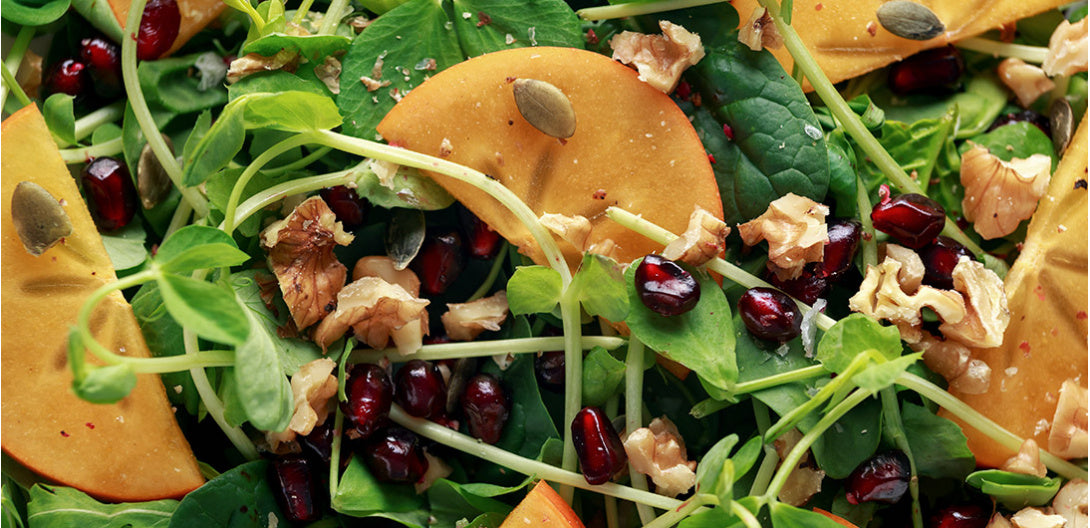
The right ingredients
Technically, vinaigrette is a cold emulsified sauce mixing two main ingredients: oil and vinegar, generally with the salt and pepper duo.
When you know the diversity of these products, you understand how this simple base can be transformed into a wide variety of recipes! Olive oil "fruity green" + Balsamic vinegar of Modena, "fruity black" olive oil + white wine vinegar with herbs, toasted sesame or hazelnut oil + Sherry vinegar, walnut or almond oil + raspberry vinegar, rapeseed oil + blackcurrant vinegar...: the list of combinations is almost endless, especially since vinegar, whether balsamic or fruit, can be replaced, entirely or in part, by another acidic ingredient such as lemon or grapefruit juice.
Several elements can be added depending on your desires and the dishes to be enhanced: shallots, garlic, herbs, spices, citrus zests, capers, chopped gherkins, anchovies, soy sauce, hard-boiled eggs, honey... And mustard? It often enhances French vinaigrette and gives it body, but it doesn't go with all dishes. Its use is therefore common, but not systematic.
The right recipe
A good vinaigrette recipe is above all about balance. Whatever the vinaigrette recipe chosen, the fundamental rule is to dissolve the salt in the vinegar before adding the oil very gradually, beating or whisking. Salt, in fact, does not dissolve in oil. The same goes for the mustard version: it must be thoroughly mixed with the vinegar at the beginning of the preparation, before adding the oil.
It is also important to remember that vinaigrette is an emulsion, which means a mixture of two liquid substances that normally cannot be mixed. To be able to mix them, they must be shaken together. In the case of vinaigrette, this operation can be carried out with a fork, a whisk, a "magic spoon" or with the help of a blender. It is also possible to combine the ingredients in a jar or bottle, close it tightly... then shake vigorously!
The right dosage
Generally, three times more oil than vinegar is used in vinaigrette, for example 3 tablespoons of oil for 1 tablespoon of vinegar. This classic dosage must, of course, be adjusted according to preferences, but also the ingredients used (a white or red wine vinegar is more acidic than a balsamic, cider or Sherry vinegar) and the flavors of the dish to accompany.
Preventing vinaigrette from separating (emulsion) Vinaigrette is indeed an emulsion, but an ephemeral emulsion because oil and vinegar have the annoying tendency to repel each other: after a certain time, the oil rises above the vinegar. The addition of mustard, or egg yolks as in mayonnaise, improves stability, because these two ingredients contain surfactant molecules that minimize repulsion between oil and vinegar.
To ensure that this adventure worthy of a romantic comedy ends in a lasting love story, some chefs recommend adding a little hot water to the emulsified vinaigrette (about 50 ml of water for ½ liter of vinaigrette), using an immersion blender.
How to store your vinaigrette
Homemade vinaigrette can be prepared in advance and kept in a tightly closed jar or bottle, in the refrigerator. Just shake the bottle just before serving to re-emulsify!

Leave a comment
This site is protected by hCaptcha and the hCaptcha Privacy Policy and Terms of Service apply.